Instagram Fake Followers and Bot Detection (2026): How to Spot and Remove Them
How to detect Instagram fake followers and bots in 2026: the manual signals, the fastest at-scale checks (engagement-rate test + follower audit), why fakes hurt your reach and brand deals, and how to clean up and grow with real accounts instead.
7 min readInstagram Growth
On this page
- How to detect fake Instagram followers: quick answer
- What "fake followers" actually means
- How to spot fake followers by hand
- How to detect fake followers at scale
- Why fake followers hurt you
- How to clean up and prevent fake followers
- If you do add followers, add real ones
- Frequently asked questions about Instagram fake followers and bots
- How can I tell if Instagram followers are fake?
- Do fake followers hurt your Instagram account?
- How do I remove fake followers from Instagram?
- Does Instagram delete fake and bot accounts?
- What is a normal percentage of fake followers?
- Should I buy followers to grow faster?
- The bottom line
Fake followers inflate one number — your follower count — while dragging down engagement rate, reach, and the trust a brand or buyer places in you. This guide to Instagram bot detection shows how to spot bots and fake followers (by hand and at scale), why they hurt more than they help, how to clean them up, and how to avoid adding more.
How to detect fake Instagram followers: quick answer
You can detect fake Instagram followers by checking for the tell-tale signs — no profile photo, generic or number-heavy usernames, zero posts, a wildly lopsided following-to-followers ratio, and engagement far below the account's size. The fastest check at scale is an engagement-rate test plus a follower-audit tool like the free Fake Follower Audit. Fake followers hurt you: they dilute your engagement rate, suppress reach, cost you brand deals, and risk being removed in Instagram's bot sweeps. The fix is to stop adding them and grow with real accounts instead.
What "fake followers" actually means
Not all low-quality followers are the same thing:
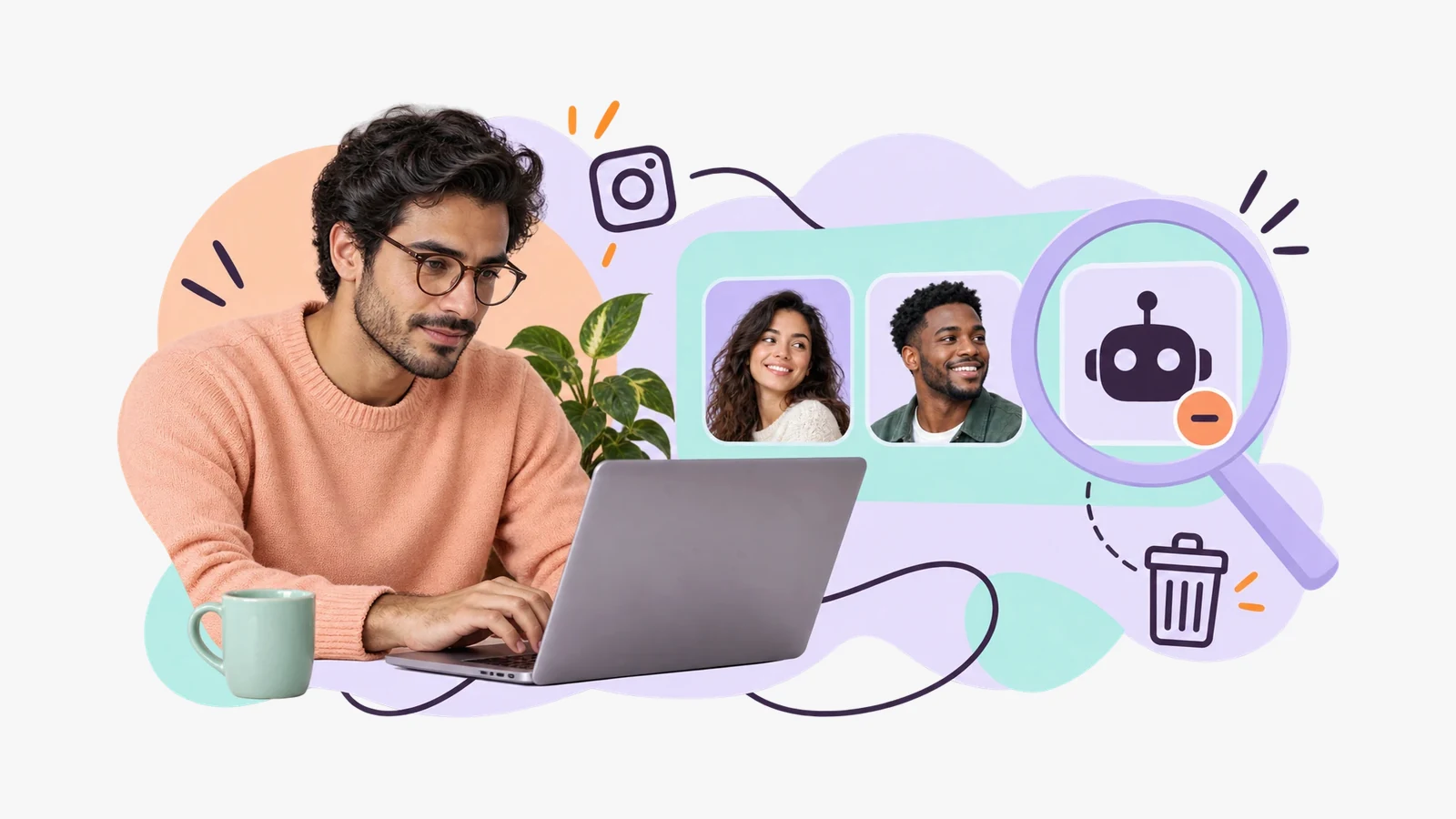
- Bots — automated accounts with no real person behind them. Often no photo, no posts, and spammy or copied bios.
- Inactive / ghost accounts — real-looking but abandoned; they never like, comment, or view, so they're dead weight on your engagement rate.
- Bought bot followers — cheap, bulk followers from low-quality sellers. These are the worst kind: they spike your count, then drop or get purged.
- Mass-follow / follow-back accounts — accounts that follow thousands to farm follow-backs; they're not interested in your content.
The common thread: they don't engage. And on Instagram, engagement — not follower count — is what drives distribution.
How to spot fake followers by hand
Open a suspicious follower (or scan your own list) and look for these signals. One alone isn't proof; several together is:
- No profile picture or a stock/stolen image.
- Generic or random usernames — strings of numbers, repeated letters, or "name1234567."
- Zero or one post, often posted long ago.
- Lopsided ratio — following 5,000+, followed by a handful.
- Spammy bios or comments — emoji-only comments like "🔥🔥 nice!" on every post, or links to sketchy sites.
- No engagement from them — they never like or comment despite "following."
- Sudden follower spikes with no matching jump in likes, comments, or reach.
How to detect fake followers at scale
Checking accounts one by one doesn't scale. Two faster methods:
- Run an engagement-rate test. Divide average engagement (likes + comments) by followers. A large following with an engagement rate far below the norm for its size is the single biggest red flag. Use the free Instagram engagement-rate calculator and compare against the benchmarks in our Instagram statistics.
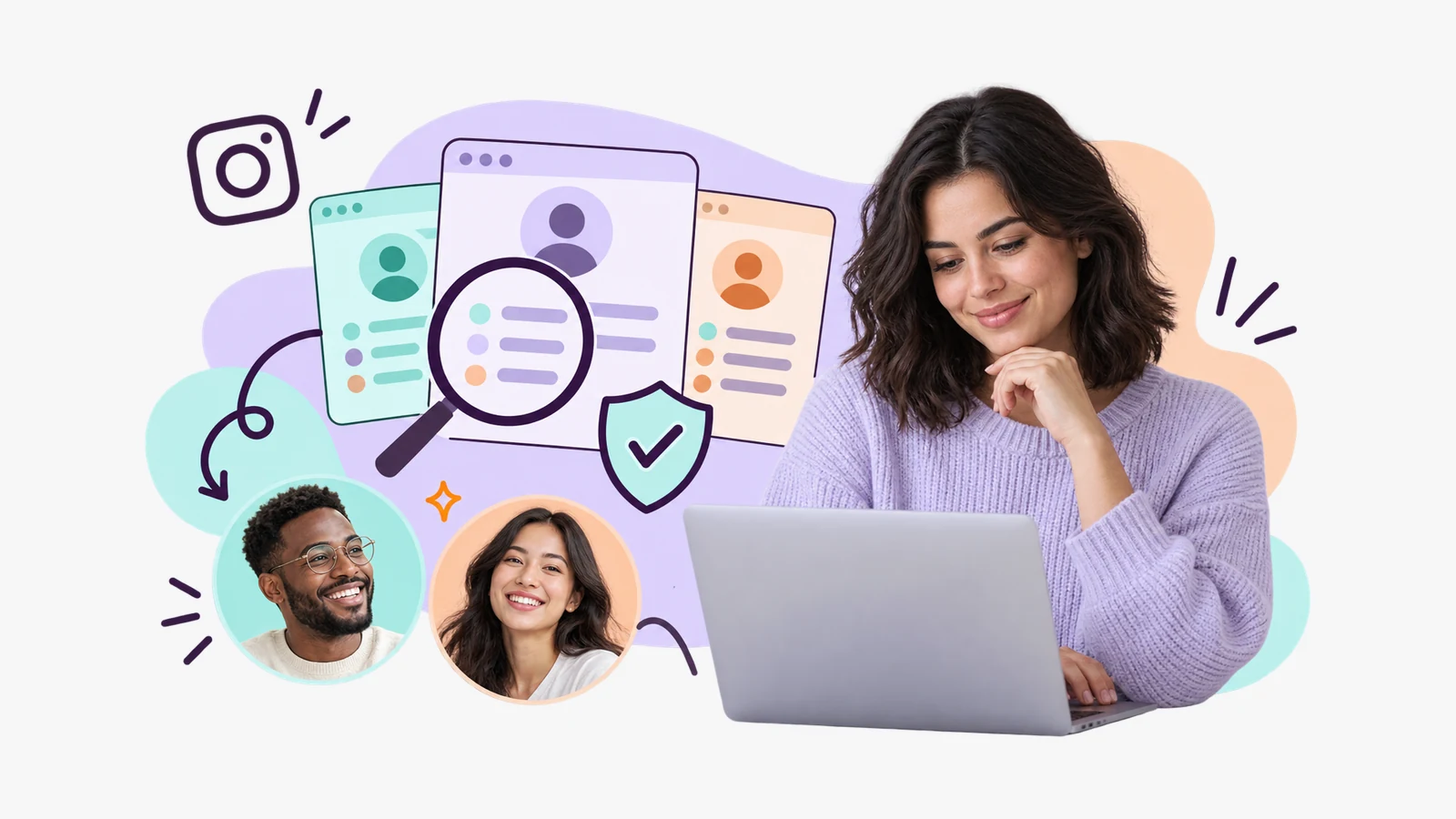
- Use a follower-audit tool. The free Fake Follower Audit scores any public account across multiple signals to estimate the real-vs-bot-vs-dormant split — the same kind of check agencies run before paying for an influencer partnership.
Why fake followers hurt you
- They tank your engagement rate. Engagement rate is followers divided into engagement — add followers who never engage and the percentage falls, which is the metric brands and the algorithm watch.
- They suppress reach. Instagram's ranking leans on early engagement velocity. Followers who don't interact send the wrong signal and can dampen how widely a post is shown.
- They cost you brand deals. Sponsors audit follower quality. A high fake-follower percentage is a deal-breaker — and easy for them to detect.
- They can get purged. Instagram runs periodic enforcement sweeps that remove fake and bot accounts, so bought bots often drop off later — which can leave a visible dip in your count.
- They erode trust. A big number with dead comments reads as inauthentic to real visitors, the opposite of social proof.
How to clean up and prevent fake followers
- Audit first. Run the engagement-rate test and a follower audit to size the problem before acting.
- Remove the obvious bots. Manually remove clear bot followers (Instagram lets you remove a follower without blocking). Do it gradually, not in one mass purge.
- Stop the inflow. Don't buy cheap bulk followers, avoid follow/unfollow bots and "engagement pods" of fake accounts, and skip giveaways that attract prize-hunters who never engage.
- Grow with real people. Consistent, native content and genuine engagement attract followers who actually interact — the only kind that helps your numbers.
If you do add followers, add real ones
Bot followers are exactly what this article warns against — so if you ever buy engagement for a starter signal, the whole point is to avoid bots. That's the line a credible provider draws: Likes.io delivers real, active accounts (its five-point vetting screens for profile completeness, account age, realistic ratios, recent activity, and interaction history), password-free and paced, with a 2-year refill. Be honest about the limits, though: buying engagement runs against Instagram's terms, it's a social-proof signal rather than real reach or sales, and it never replaces content. The takeaway from a fake-follower article is simple — if it's bots, it hurts you; if you add anything, it has to be real.
Frequently asked questions about Instagram fake followers and bots
How can I tell if Instagram followers are fake?
Look for accounts with no profile picture, generic number-heavy usernames, zero posts, a huge following-to-followers imbalance, and spammy or no engagement. At scale, the clearest signal is an engagement rate far below the norm for the account's size — run an engagement-rate test or a follower-audit tool to estimate the real-vs-bot split.
Do fake followers hurt your Instagram account?
Yes. They dilute your engagement rate, can suppress reach by sending weak engagement signals, cost you brand deals (sponsors audit follower quality), and get removed in Instagram's bot purges. A smaller, engaged audience outperforms a large, fake one.
How do I remove fake followers from Instagram?
Audit first, then remove obvious bots manually (Instagram lets you remove a follower without blocking), gradually rather than all at once. Most importantly, stop the inflow — don't buy bulk bot followers or use follow/unfollow automation.
Does Instagram delete fake and bot accounts?
Yes — Instagram periodically removes fake, bot, and spam accounts in enforcement sweeps. It doesn't catch everything at once, but bought bot followers often drop off over time, which can leave a visible dip in your count.
What is a normal percentage of fake followers?
Every account has some inactive or dormant followers — that's normal. A high share of clear bots is the problem. Rather than chase a single "safe" percentage, run a follower audit and compare your engagement rate to benchmarks for your follower tier; a big gap is the real warning sign.
Should I buy followers to grow faster?
Not bot followers — those are the exact problem this article describes. If you use a paid service at all, it must deliver real, vetted accounts (password-free and paced), and even then treat it as a small social-proof signal, not a growth strategy, since buying engagement runs against Instagram's terms and won't create real reach on its own.
The bottom line
Fake followers raise your follower count while lowering engagement, weakening reach, costing deals, and risking an eventual purge. Detect them with an engagement-rate test and a follower audit, remove the obvious bots, and grow with real people whose engagement actually counts. If you ever add followers for social proof, the only version that doesn't backfire is real accounts.
Curious where your account stands? Run the free Fake Follower Audit — no login, just a public-account check.
The Likes.io content team covers social media growth strategies, platform algorithm updates, and marketing tips for Instagram, TikTok, and YouTube.